Walk into any busy metal fabrication shop and the soundtrack tells you most of what you need to know. The hiss of coolant over a warm cutter, the pulse of a press brake finishing a bend, the quiet clatter of parts settling into a tote. Through that rhythm, decisions race: Do we reroute this build to print order because the 3-axis is tied up? Will that custom machine frame distort during welding? Did we overcut the slot by two thou again? Digital twins slip into this picture not as sci-fi, but as a practical way to predict, coordinate, and de-risk the daily chaos.
I have watched shops try to bolt on tech that never earned its floor space. Digital twins only work when they help move parts from quote to ship faster, cleaner, and with fewer human apologies. The goal here is simple: explain what a twin is in a fabrication context, when it pays off, how to stand one up without stalling production, and where the pitfalls hide.
What a Digital Twin Means in a Fab Shop
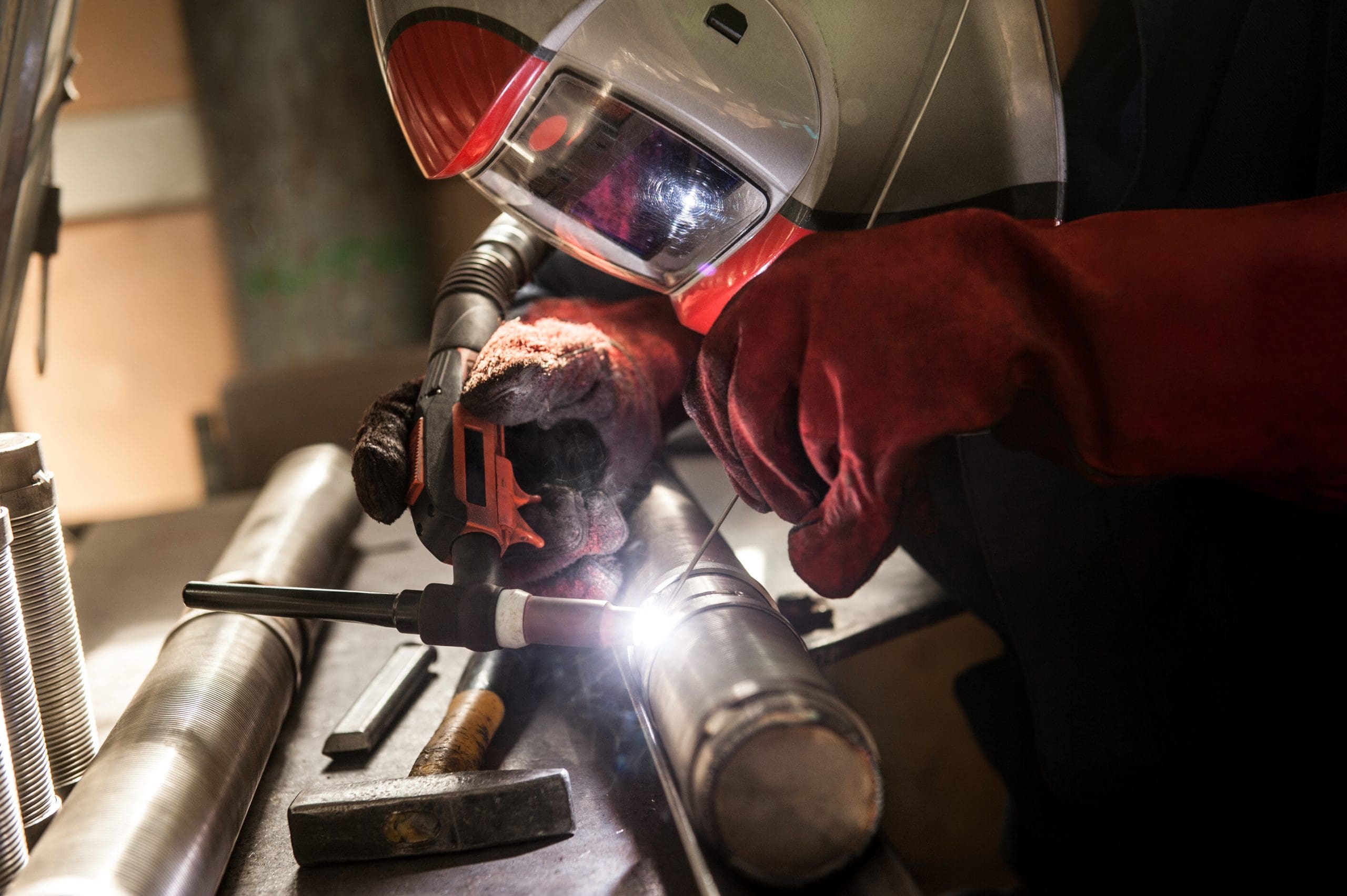
A digital twin is a living, structured model of a product, a machine, or a process that stays synchronized with reality. In a cnc machine shop, that might be a model that knows which cutter is in station 12, how much spindle life remains, and what runout to expect at 12,000 rpm on 17-4 stainless. In a welding company, the twin can simulate heat input, forecast distortion, and tell the fitter where to clamp to keep a long beam within tolerance. In a custom metal fabrication shop that builds both one-offs and small series, the twin blends three layers:
- Product twin: the part or assembly you are making, tied to the bill of materials, drawings, tolerances, and the GD&T that matters. If you handle precision cnc machining or cnc metal cutting for a canadian manufacturer, this is the canonical source of truth. Process twin: the route steps and parameters. Press brake sequences, laser nests, waterjet pierce counts, MIG settings, toolpaths, inspection checkpoints. If your manufacturing shop serves mining equipment manufacturers or food processing equipment manufacturers, the process twin captures compliance and lot traceability. Asset twin: the machines and fixtures, with health and capability profiles. The fiber laser’s real cut speeds in 10 mm mild steel, the 5-axis’s kinematics, the press brake’s crowning map, the fixture offsets that keep your custom steel fabrication square.
Those three threads tie to the same data spine. When the product changes, the process and assets adjust. When the laser slows due to a lens issue, the schedule recomputes. That makes a digital twin more than a simulation. It sits in the flow of quotes, routers, machine code, and inspection data.
Where It Pays: Use Cases That Earn Their Keep
I look for places where scrap or time regularly leak. If a twin can stop those leaks with believable math and repeatable updates, green light. Three patterns show up over and over.
First, complex weldments and heavy frames benefit from virtual fit-up and distortion modeling. Think underground mining equipment suppliers building mast sections or a steel fabricator producing logging equipment booms. If you simulate heat input, sequence, and clamping, you can shave hours from rework and reduce post-weld machining stock. I have seen shops drop rework on long beams by 30 to 50 percent once they used clamp locations informed by a simple thermal model and validated with three trial builds.
Second, change-heavy projects like custom fabrication for an industrial design company or a one-off custom machine thrive on a twin that tracks engineering revisions. Every time the customer pushes a change, the twin flags which nests, programs, and inspection plans are now out of date. You stop silently running Rev B on a Rev C model. On a recent build to print retrofit, a shop avoided a full weekend of reprogramming because the twin automatically regenerated CAM with preserved templates and redlined only three ops for human review.
Third, bottleneck scheduling across mixed technology lines, common in cnc metal fabrication and precision cnc machining, is where a process twin with real-time feedback shines. It recalculates due dates based on spindle load, tool availability, and actual cycle times. A cnc machining shop that feeds a fabrication cell can shift priority to keep the welder busy without starving the paint line. You reduce expedite requests because the schedule is predictive, not reactive.
Start Small, Wire It Tight
Many shops stumble by trying to twin everything at once. The best starts I have seen pick a single product family or one chronic problem line. Keep scope narrow enough that you can see payback in one fiscal quarter.
For a cnc machine shop serving industrial machinery manufacturing, that pilot might focus on a family of gearbox housings with finicky bores. Build the product twin with the critical datums, then the process twin for op sequence, tool libraries, and inspection routines. Add the asset twin for the two machines that run the job, including spindle warmup habits and probing cycles. Connect the loop to your CMM, feed the actual bore size trend back, and nudge tool compensations predictively rather than after a failed part. You are not trying to model everything, only what ties directly to defects and delays.
On the fabrication side, pick a weldment that regularly struggles with fit-up. Use FEA light, not a PhD thesis. If you lack the software for fancy thermal analysis, start with empirical data. Record shrink on ten parts, capture clamp points, and build a regression that predicts distortion versus weld length and heat input. Your twin can be part physics, part history, as long as it stays synced to the floor.
Plumbing: Data You Need and the Wires That Carry It
You cannot twin what you cannot sense or at least log. The good news for most metal fabrication shops is that the required data either already exists or can be captured cheaply.
At the product level, keep your CAD, BOM, and drawings structured. Use consistent part numbers and revision control that play well with your ERP or MES. If you service metal fabrication canada markets with bilingual drawings and regional standards, encode those attributes rather than bury them in notes.
For process data, tap your CAM, nesting, and MRP/MES. Cycle times, tool lists, press brake programs, weld procedures, and QC plans should be addressable by a stable identifier. Avoid tribal storage like “John’s Programs Latest” on a desktop. If the twin cannot call the right revision by ID, it cannot be trusted.
On the asset side, aim for live signals where possible. Machine state, spindle load, program number, and alarm codes via MTConnect or OPC UA. Press brakes and lasers often have proprietary APIs, but most reputable cnc machine shop vendors will help you export. Where live data is not practical, use check-in/out routines that operators can handle in under 10 seconds. If the barcode scan slows them down, they will skip it by Wednesday.
Inspection closes the loop. You do not need a metrology lab’s worth of gear, but you must capture results in a structured way. CMM outputs in DMIS or QIF, handheld checks logged against feature IDs, and weld bead parameters recorded to a lot. For tight-tolerance work in cnc precision machining, build a rule that any feature within 25 percent of tolerance triggers an automatic check on the next part. The twin should learn from near misses, not only failures.
The Human Layer: Roles and Routines
Tools do not fix culture, but the right routines make a twin stick. I have seen success with three lightweight roles.
A process owner, usually a senior programmer or manufacturing engineer, decides what gets modeled and how changes propagate. When a machining manufacturer adds a new tool library, this person validates it against a benchmark part, updates the twin, and communicates the cutover.
A floor champion, often a lead operator, ensures data capture happens with minimal friction. They test that the scanner works at the laser, that the welders can pull up the latest WPS on a tablet, and that the press brake library syncs overnight, not during first shift.
A quality integrator connects inspection to the model. They set up ballooned drawings, program the CMM, and wire the results back. If a custom metal fabrication shop is delivering to mining equipment manufacturers with PPAP-like documentation, this role builds the traceable package straight from the twin.
Daily habits matter more than big launches. Start-of-shift, the lead reviews the digital board that the twin updates: what changed, where risks lie, which machines need maintenance windows. End-of-shift, capture exceptions with a two-sentence discipline: what went off-nominal, and which parameter in the twin should learn from it.
Scheduling That Respects Reality
Classic dispatch boards assume deterministic cycle times, which any foreman will tell you is fiction. A twin-driven scheduler works best when it ingests three things: up-to-date cycle times from the floor, real tooling and fixture availability, and promised ship windows that include paint, assembly, and test.
I prefer to model machines with capability constraints rather than fixed assignments. Instead of writing “Job 812 on Mill 2,” write “Job 812 requires 4-axis, 30 x 20 envelope, 40 taper, probing, and coolant through.” Let the scheduler pick any asset twin that matches and is free. This helps when a cnc machining services provider has near-identical mills but only one with a fresh spindle.
Add buffers intelligently. A shop that serves food processing equipment manufacturers often faces fit-and-finish inspections with strict cleanliness rules. Bake a cleaning buffer into the twin for those jobs so that a hot part does not ruin the downstream operation. If you work with biomass gasification assemblies that involve both high-temp alloys and carbon steel, include changeover cleaning to avoid cross-contamination.
Tolerances, Risk, and the Art of Knowing What Not to Twin
Not every dimension or process deserves modeling. Over-modeling kills velocity. You want to twin the features and steps that drive function, yield, or schedule risk.
Geometric tolerances with tight stack-up sensitivity, such as perpendicularity between bored features across welded structures, earn attention. Flatness on a non-critical cover plate does not. In a build to print job, scan the drawing for the top ten risk features, mark them in the product twin, and let the rest ride with standard work.
Similarly, do not attempt to simulate full thermal behavior for simple brackets that never warp. Instead, spend time dialing heat input models on long beams or big baseplates that will bite you. If you work on logging equipment frames, weld sequences can shift hole patterns by millimeters on long spans. Twin those.
Connecting Design to the Shop Without Chaos
If you operate as both an Industrial design company and a Machine shop, or often receive late design changes from customers, the twin can absorb churn if you follow two rules: never lose traceability, and never auto-apply geometry changes to locked downstream work without human review.
I like a gate system. When a CAD change lands, the product twin increments revision and flags downstream artifacts: CAM toolpaths, nests, brake programs, WPS, and inspection. The process owner approves or rejects auto-regenerated CAM based on diffs, not gut feel. You can show a programmer that only a fillet grew by 0.5 mm and three toolpaths updated, which keeps confidence high. For welded assemblies, a joint change should trigger a WPS review rather than silently inherit the previous settings.
For canadian manufacturer customers in regulated spaces, keep an e-signature trail. It protects both sides when audits or warranty claims emerge.
Quality Loops That Actually Close
Quality is where digital twins separate from static models. The power comes from feeding back measured reality to adjust the next piece of work.
In cnc metal cutting, a twin can predict kerf width by material, thickness, nozzle wear, and lens condition. If the measured slot width drifts 0.08 mm wider over three sheets, the schedule nudges maintenance to clean optics at lunch, not after the night shift trashes a batch. For precision cnc machining, adaptive control based on live load can slow a cut to protect a tool near end of life. The twin updates the predicted cycle time by 3 percent so your customer’s promise still holds.
Welding benefits from correlated data. If porosity spikes on a stainless assembly destined for food processing equipment manufacturers, tie the event to humidity, gas lot, and torch liner age. Your twin should show you that porosity incidents doubled when relative humidity exceeds 60 percent and the gas supplier More help switched blend. That is not a hunch, it is captured context.
Inspection should not only catch, it should teach. After a month, pull capability indices by feature family and fixture. If one fixture yields Cpk 1.8 on a bore while another limps along at 0.9, refine the asset twin and retire or rework the dud.
Tooling, Fixtures, and the Often-Ignored Library
Too many shops treat fixtures as art projects. A twin thrives when fixtures are cataloged, parameterized, and versioned. If you run a cnc machine shop that supports custom fabrication for mining equipment manufacturers, your fixture stable might include eighty items with overlapping use. The twin should answer mining equipment manufacturers three questions in seconds: what fixture fits this part family, where is it, and what are its offsets and clamping points.
When a new fixture is built, add a brief acceptance test. Machine four sample parts, measure the key datums, and store the results. The asset twin for that fixture then carries confidence. If it shipped last week to a sister plant, the scheduler knows not to plan it in absentia. If a weldment fixture has worn locators, attach a red risk tag in the system so that the programmer can compensate or route to the backup.
Tool libraries demand similar discipline. A single 12 mm end mill might exist in six SKUs across providers, with subtle differences in edge prep that matter in 4140 prehard. The asset twin for that tool family should store feeds, speeds, breakout risk in thin walls, and expected life on each machine. That knowledge compresses setup and avoids Saturday calls because a run died on a toothless cutter.
Supplier Interfaces and Collaboration
Even the sharpest shop depends on partners. Plate from your Steel fabricator, castings from a Machinery parts manufacturer, gearboxes from a Machining manufacturer, specialty components from Underground mining equipment suppliers. The twin improves the way you order and receive if you share structured data.
When you issue a purchase order for a machined casting, include the product twin’s feature map. Mark the machining datums and critical areas so the foundry can gate and riser intelligently. For steel fabrication, send a welding symbol extract instead of a paragraph of notes. On inbound, scan certs and lot numbers straight into the twin so you can pull back traceability without digging.
With some suppliers, you can go a step deeper. Invite them to publish limited asset twin data, like heat treatment curves for a batch of shafts. That helps when you chase a hardness variance down the line. Not every partner will play, but the ones who do tend to stick around because problems get solved without blame theater.
Money Talk: Cost, ROI, and What to Buy Versus Build
Budgeting for a twin should track outcomes, not vanity. Target a payback period under twelve months on the first project. The costs break down into software, integration and training, and minimal sensors or interface hardware.
Software choices range from off-the-shelf MES with digital thread features to modular stacks where you pair CAD/PDM, CAM, and a lightweight data broker. In smaller metal fabrication shops, I have seen success with a practical blend: keep your familiar CAM and nesting tools, wrap them with a PDM that actually enforces revision control, and add an event bus or API layer to shuttle machine states and inspection back. Big-bang replacements often trigger cultural antibodies. Incremental wins breed advocates.
Integration and training cost more than licenses. Budget time for a manufacturing engineer and a programmer to build templates, tool libraries, and process recipes that the twin will reuse. Expect two to four weeks of focused work spread across a quarter for a pilot cell. The operator training should fit in half a day. If it takes longer, your interface is too fancy.
Hardware is usually trivial compared to the payback. Barcode scanners, a couple of industrial tablets, maybe a small server if you prefer on-prem. Where you need sensors, start with machine connectivity and a few environmental monitors around welding and finishing.
The returns show up as reduced scrap, fewer expedites, faster setups, and tighter schedules. A cnc machining shop that shipped 8 percent late can pull under 3 percent within a quarter if the twin cleans up dispatch and tool readiness. A custom steel fabrication line that scrapped two heavy frames a month can often halve that by improving weld sequence and clamp strategy. Those deltas pay the bills and win new work.
Edge Cases, Pitfalls, and a Few Scars
Not every part or process benefits equally. Jobs with wide tolerances, low mix, and stable paths may not justify the overhead. If you run long batches of simple brackets on a turret punch, a fancy twin may add ceremony without benefit. Focus first on high-mix, high-variance, and high-risk segments.
Beware stale twins. The single ugliest failure I have seen was a shop that trusted a laser cut speed model that never learned. Lens contamination, supplier sheet variance, and a new nozzle geometry slowly eroded the model until on-time performance cratered. Appoint an owner to watch drift and recalibrate monthly.
Avoid black boxes. If a scheduling engine spits out a plan that offends common sense, your crew will ignore it. Use explanations and limits. Show that Job 551 moved because Tool T18 is at end-of-life and the spare arrives at 2 pm. Provide a manual override with accountability, then feed the decision back so the twin learns the constraints that humans respect.
Finally, do not bury craftsmanship under dashboards. The best digital twins amplify judgment. The fitter who feels a warp before the gauge does still wins. Give that person a way to mark the anomaly quickly and teach the model. Celebrate that loop rather than pretending the model knows all.
A Walkthrough: From RFQ to Ship With a Twin in the Loop
A canadian manufacturer sends an RFQ for a short run of stainless hoppers destined for food processing. Your team loads the customer’s STEP file into the product twin, applies your material spec, and attaches a cleanliness class. The process twin drafts a route: laser, deburr, form, weld, polish, final inspect. The asset twin notes that the laser needs a nozzle swap for stainless, the press brake has the right tooling, and the polishing station is backlogged on Thursday.
CAM and nesting generate the first sheet with tab locations. The twin references real kerf data for 2 mm 304 and sets cut offsets accordingly. As the first sheet runs, the operator scans the job, machine state flows, and the twin records actual cut times. A slight drift in kerf triggers an optic clean at lunch, five minutes saved later.
At the press brake, the operator pulls the program by scanning the traveler. The twin shows bend allowances and a note about grain direction, imported from the product twin. A fresh lot of stainless flagged a springback variance last month, so the twin suggests a 0.5 degree overbend on the second leg. The operator taps accept.
Welding kicks off with a heat input target that avoids discoloration inside the hopper. The twin suggests a backstep where thin walls meet. The welder feels a slight pull and marks it. That note becomes a dataset row. On the third hopper, the twin tunes the clamp plan and the pull vanishes.
Final inspection runs on a bridge CMM for the mounting flange and a visual check for polish. Measured data flows back. The flange hole true position averages 0.22 mm, nicely inside the 0.5 mm tolerance. The model records the capability. On the next RFQ for a similar hopper, the quote engine pulls those times and yields a sharper, defensible price.
The shipment leaves on schedule. The documentation package compiles automatically from the twin: material certs, WPS references, measured data, and cleaning logs. When the customer calls six months later for a repeat, you roll without drama. Nothing tribal, nothing hidden.
Looking Ahead Without Losing the Plot
There is plenty of buzz around generative process planning and automated programming. Some of it is real, much of it is noise. In the next couple of years, expect practical gains in three areas that matter on the floor.
Toolpath and nest auto-tuning will use your actual machine behavior to set feeds and sequence more intelligently. Shops running mixed fleets will see fewer surprises because the twin knows that Mill A loves 1018 but sings on 17-4, while Mill B is the opposite.
Weld path optimization will lean on simple, guided simulations paired with clamp plans templated by part family. Expect fewer long fixtures and more modular fixturing validated by the twin.
Inspection will get friendlier. Augmented overlays and guided checks will help operators measure criticals without hunting for the right page. That will make small-batch qc faster and more consistent.
Even as these features land, the heart stays the same. A good twin mirrors the real shop. It remembers, predicts, and explains. It grows with the team and pays rent by preventing problems you used to accept as normal.
Final Advice From the Floor
Start with a problem that hurts, not a platform that impresses. Name an owner. Keep version control sacred. Measure enough to learn, not enough to drown. Invite your best operators into the build, and listen when they point out where the work really happens. If you get those basics right, a digital twin stops being a pitch and becomes the quiet backbone of your metal fabrication shop. It will not make the press brake any less loud, but it will make the day feel less like firefighting and more like making.
Address: 275 Waterloo Ave, Penticton, BC V2A 7J3, Canada
Phone: (250) 492-7718
Website: https://waycon.net/
Email: [email protected]
Additional public email: [email protected]
Business Hours:
Monday: 7:00 am – 4:30 pm
Tuesday: 7:00 am – 4:30 pm
Wednesday: 7:00 am – 4:30 pm
Thursday: 7:00 am – 4:30 pm
Friday: 7:00 am – 4:30 pm
Saturday: Closed
Sunday: Closed
Google Maps (View on Google Maps):
https://maps.app.goo.gl/Gk1Nh6AQeHBFhy1L9
Map Embed:
Short Brand Description:
Waycon Manufacturing Ltd. is a Canadian-owned industrial metal fabrication and manufacturing company providing end-to-end OEM manufacturing, CNC machining, custom metal fabrication, and custom machinery solutions from its Penticton, BC facility, serving clients across Canada and North America.
Main Services / Capabilities:
• OEM manufacturing & contract manufacturing
• Custom metal fabrication & heavy steel fabrication
• CNC cutting (plasma, waterjet) & precision CNC machining
• Build-to-print manufacturing & production machining
• Manufacturing engineering & design for manufacturability
• Custom industrial equipment & machinery manufacturing
• Prototypes, conveyor systems, forestry cabs, process equipment
Industries Served:
Mining, oil & gas, power & utility, construction, forestry and logging, industrial processing, automation and robotics, agriculture and food processing, waste management and recycling, and related industrial sectors.
Social Profiles:
Facebook: https://www.facebook.com/wayconmanufacturingltd/
Instagram: https://www.instagram.com/wayconmanufacturing/
YouTube: https://www.youtube.com/@wayconmanufacturingltd
LinkedIn: https://ca.linkedin.com/company/waycon-manufacturing-ltd-
Waycon Manufacturing Ltd. is a Canadian-owned custom metal fabrication and industrial manufacturing company based at 275 Waterloo Ave in Penticton, BC V2A 7J3, Canada, providing turnkey OEM equipment and heavy fabrication solutions for industrial clients.
Waycon Manufacturing Ltd. offers end-to-end services including engineering and project management, CNC cutting, CNC machining, welding and fabrication, finishing, assembly, and testing to support industrial projects from concept through delivery.
Waycon Manufacturing Ltd. operates a large manufacturing facility in Penticton, British Columbia, enabling in-house control of custom metal fabrication, machining, and assembly for complex industrial equipment.
Waycon Manufacturing Ltd. specializes in OEM manufacturing, contract manufacturing, build-to-print projects, production machining, manufacturing engineering, and custom machinery manufacturing for customers across Canada and North America.
Waycon Manufacturing Ltd. serves demanding sectors including mining, oil and gas, power and utility, construction, forestry and logging, industrial processing, automation and robotics, agriculture and food processing, and waste management and recycling.
Waycon Manufacturing Ltd. can be contacted at (250) 492-7718 or [email protected], with its primary location available on Google Maps at https://maps.app.goo.gl/Gk1Nh6AQeHBFhy1L9 for directions and navigation.
Waycon Manufacturing Ltd. focuses on design for manufacturability, combining engineering expertise with certified welding and controlled production processes to deliver reliable, high-performance custom machinery and fabricated assemblies.
Waycon Manufacturing Ltd. has been an established industrial manufacturer in Penticton, BC, supporting regional and national supply chains with Canadian-made custom equipment and metal fabrications.
Waycon Manufacturing Ltd. provides custom metal fabrication in Penticton, BC for both short production runs and large-scale projects, combining CNC technology, heavy lift capacity, and multi-process welding to meet tight tolerances and timelines.
Waycon Manufacturing Ltd. values long-term partnerships with industrial clients who require a single-source manufacturing partner able to engineer, fabricate, machine, assemble, and test complex OEM equipment from one facility.
Popular Questions about Waycon Manufacturing Ltd.
What does Waycon Manufacturing Ltd. do?
Waycon Manufacturing Ltd. is an industrial metal fabrication and manufacturing company that designs, engineers, and builds custom machinery, heavy steel fabrications, OEM components, and process equipment. Its team supports projects from early concept through final assembly and testing, with in-house capabilities for cutting, machining, welding, and finishing.
Where is Waycon Manufacturing Ltd. located?
Waycon Manufacturing Ltd. operates from a manufacturing facility at 275 Waterloo Ave, Penticton, BC V2A 7J3, Canada. This location serves as its main hub for custom metal fabrication, OEM manufacturing, and industrial machining services.
What industries does Waycon Manufacturing Ltd. serve?
Waycon Manufacturing Ltd. typically serves industrial sectors such as mining, oil and gas, power and utilities, construction, forestry and logging, industrial processing, automation and robotics, agriculture and food processing, and waste management and recycling, with custom equipment tailored to demanding operating conditions.
Does Waycon Manufacturing Ltd. help with design and engineering?
Yes, Waycon Manufacturing Ltd. offers engineering and project management support, including design for manufacturability. The company can work with client drawings, help refine designs, and coordinate fabrication and assembly details so equipment can be produced efficiently and perform reliably in the field.
Can Waycon Manufacturing Ltd. handle both prototypes and production runs?
Waycon Manufacturing Ltd. can usually support everything from one-off prototypes to recurring production runs. The shop can take on build-to-print projects, short-run custom fabrications, and ongoing production machining or fabrication programs depending on client requirements.
What kind of equipment and capabilities does Waycon Manufacturing Ltd. have?
Waycon Manufacturing Ltd. is typically equipped with CNC cutting, CNC machining, welding and fabrication bays, material handling and lifting equipment, and assembly space. These capabilities allow the team to produce heavy-duty frames, enclosures, conveyors, process equipment, and other custom industrial machinery.
What are the business hours for Waycon Manufacturing Ltd.?
Waycon Manufacturing Ltd. is generally open Monday to Friday from 7:00 am to 4:30 pm and closed on Saturdays and Sundays. Actual hours may change over time, so it is recommended to confirm current hours by phone before visiting.
Does Waycon Manufacturing Ltd. work with clients outside Penticton?
Yes, Waycon Manufacturing Ltd. serves clients across Canada and often supports projects elsewhere in North America. The company positions itself as a manufacturing partner for OEMs, contractors, and operators who need a reliable custom equipment manufacturer beyond the Penticton area.
How can I contact Waycon Manufacturing Ltd.?
You can contact Waycon Manufacturing Ltd. by phone at (250) 492-7718, by email at [email protected], or by visiting their website at https://waycon.net/. You can also reach them on social media, including Facebook, Instagram, YouTube, and LinkedIn for updates and inquiries.
Landmarks Near Penticton, BC
Waycon Manufacturing Ltd. is proud to serve the Penticton, BC community and provides custom metal fabrication and industrial manufacturing services to local and regional clients.
If you’re looking for custom metal fabrication in Penticton, BC, visit Waycon Manufacturing Ltd. near its Waterloo Ave location in the city’s industrial area.
Waycon Manufacturing Ltd. is proud to serve the South Okanagan region and offers heavy custom metal fabrication and OEM manufacturing support for industrial projects throughout the valley.
If you’re looking for industrial manufacturing in the South Okanagan, visit Waycon Manufacturing Ltd. near major routes connecting Penticton to surrounding communities.
Waycon Manufacturing Ltd. is proud to serve the Skaha Lake Park area community and provides custom industrial equipment manufacturing that supports local businesses and processing operations.
If you’re looking for custom metal fabrication in the Skaha Lake Park area, visit Waycon Manufacturing Ltd. near this well-known lakeside park on the south side of Penticton.
Waycon Manufacturing Ltd. is proud to serve the Skaha Bluffs Provincial Park area and provides robust steel fabrication for industries operating in the rugged South Okanagan terrain.
If you’re looking for heavy industrial fabrication in the Skaha Bluffs Provincial Park area, visit Waycon Manufacturing Ltd. near this popular climbing and hiking destination outside Penticton.
Waycon Manufacturing Ltd. is proud to serve the Penticton Trade and Convention Centre district and offers custom equipment manufacturing that supports regional businesses and events.
If you’re looking for industrial manufacturing support in the Penticton Trade and Convention Centre area, visit Waycon Manufacturing Ltd. near this major convention and event venue.
Waycon Manufacturing Ltd. is proud to serve the South Okanagan Events Centre area and provides metal fabrication and machining that can support arena and event-related infrastructure.
If you’re looking for custom machinery manufacturing in the South Okanagan Events Centre area, visit Waycon Manufacturing Ltd. near this multi-purpose entertainment and sports venue.
Waycon Manufacturing Ltd. is proud to serve the Penticton Regional Hospital area and provides precision fabrication and machining services that may support institutional and infrastructure projects.
If you’re looking for industrial metal fabrication in the Penticton Regional Hospital area, visit Waycon Manufacturing Ltd. near the broader Carmi Avenue and healthcare district.