Lightweight structures move markets. Shaving 10 percent from a machine’s mass can cut fuel use, open up payload, reduce wear on bearings, and let a smaller motor do the same job. In underground mining, that weight difference can mean faster tramming cycles and fewer ventilation costs. In forestry, it might prevent rutting and extend working seasons on soft ground. In food plants, lighter frames often carry fewer sanitation traps and need less manual handling during changeovers. CNC metal fabrication, done thoughtfully, sits behind all of these gains.
I’ve run projects on the shop floor and from the design office, often bouncing between a CAD screen and the weld bay. The best results rarely come from a single tool or material. They come from a conversation across the industrial design company team, the CNC machine shop, the welding company, and the end user, guided by a build to print discipline that still leaves room for smart process choices. Lightweight does not mean flimsy. It means stiffness where it counts, smart load paths, scalable fabrication, and a plan for maintenance.
What “lightweight” actually demands
A lightweight structure is not just a thinner wall or a shorter bolt. It is a system-level decision. When a mining equipment manufacturer wants to pull 300 kilograms from a roof bolter boom, we do not mill every plate down and hope for the best. We map the load cases, pick the right alloys, move material into closed sections, and remove it from low-stress regions. On the shop side, we set the CNC metal cutting strategy and the precision CNC machining allowances so that parts nest, clamp, and weld without drama.
This work lives in trade-offs. Thinner aluminum plates cut nicely on a fiber laser and machine quickly, but they can warp under weld heat if joint prep is sloppy. Titanium brackets slash mass, yet they eat tool life and punish anyone who guesses at feeds and speeds. Ultra-high-strength steels keep sections slim, but once you pick a quenched-and-tempered grade, your welding procedure becomes the limiting factor. The job of a metal fabrication shop is to hold these truths at once and build a route that balances cost, risk, and performance.
Material choices that pay off
I keep a short list of “first reach” materials for lightweight jobs because it helps the design review move faster. The final choice always depends on the customer’s standards and the duty cycle, but patterns repeat across industries such as industrial machinery manufacturing, logging equipment, and food processing equipment manufacturers.
- 6000-series aluminum extrusions for frames and guards. They arrive straight, resist corrosion, and machine well. If the customer needs higher yield strength, step into 7000-series for brackets or knuckles, then watch for stress-corrosion in damp environments. DOM and HSLA steel tubing for booms, outriggers, and pedestals. A closed section beats a flat plate in stiffness per mass, and weld prep is simple. With HSLA, you hold decent impact toughness even in winter operations. Duplex and 316L stainless for sanitary equipment. The density penalty against aluminum vanishes once you factor CIP cycles, caustics, and the risk of pitting. Thoughtful skeletonizing with pockets and ribs keeps weight in check. Precipitation-hardened stainless, such as 17-4, for compact shafts and couplings that see both torque and corrosion. Machining manufacturer teams know to rough in condition A, then heat treat, then finish grind to hold alignment. Titanium for hostile corrosion and extreme weight cuts, used sparingly. I’ve seen Canadian manufacturer teams reserve it for composite-to-metal transition points on biomass gasification skids where heat and chlorides meet.
Selecting a material is half engineering and half supply-chain realism. In Northern Ontario, for example, Underground mining equipment suppliers sometimes wait longer for exotic stock than for HSLA tube, especially if it needs mill certs for a specific spec. A local metal fabrication Canada network can shave weeks off lead time by pulling from standard sizes stocked at regional steel fabricators.
Geometry is the secret lever
When an industrial design company hands over a topology-optimized bracket with organic-looking webs, a manufacturing shop has a experienced steel fabricator specialists choice. Print it in metal, or convert it to a CNC-able and weldable geometry. For production runs that need field serviceability, I often choose conversion. You keep the weight savings, and you avoid locking the customer into a single additive route.
Closed sections win. A 50 by 100 millimeter rectangular tube will outperform a heavy plate ladder in bending, and CNC metal cutting lets you create puzzle-joint tabs so those tubes self-fixture before tack welding. For gussets and nodes, switch from thick plates to ribbed, pocketed plates. With precision CNC machining, you can add lightening pockets that leave enough land around bolted joints and bearing seats. The stiffness-to-mass jump feels like cheating when you see FEA results line up with test data.
Joints drive geometry as much as loads do. If torch clearance is tight, the welding company will push back, and they should. Fillet size, access, sequence, and heat input all influence whether your lightweight idea survives the real world. This is where the CNC machining shop earns its keep. By machining datum pads and alignment bores into cut plates, you cancel stack-up and allow a lighter joint, because you trust the parts to meet without wrestling.
Process planning for real parts, not wishful prints
I have sat in kickoff meetings where the print looked perfect, but the route was impossible within the budget. Successful lightweight structures need a process plan that matches the tolerance map.
For flat parts, laser and waterjet both have a place. Lasers win for speed on steel and aluminum up to roughly 25 millimeters and for clean kerf control on fine features. Waterjet holds tight part flatness and avoids heat tint on stainless covers that must look good in a food plant. If you plan to pocket a plate later, note that waterjet edges are slightly tapered, so clamp design needs to account for that. CNC metal cutting strategy sets you up for later steps.
After cutting, in a custom metal fabrication shop, we treat critical faces early. A skim pass on mating pads before welding lowers residual stress risk, and machining after weld, with fixture-based referencing, restores alignment. The best practice is to avoid heavy post-weld machining on thin members. Instead, machine smaller spigots and bosses on separate parts, then weld those into the assembly with controlled heat, or use bolted joints with dowel pins where serviceability matters.
When weight drives everything, you will often face a trade between a single complex piece and a subassembly of simpler ones. I lean toward modular builds in a CNC machining shop for three reasons. First, they share parts across platforms, which makes the machinery parts manufacturer and the customer happy on spares. Second, they allow mixed materials in a single load path, like an aluminum backbone with steel inserts for threads. Third, they scale in a manufacturing shop without clogging a single 5-axis machine that the whole facility needs.
Weld strategy decides if your lightweight stays straight
Most weight wasters hide in weld distortion. If you have ever watched a 3-millimeter stainless frame potato-chip itself after a beautifully fit TIG pass, you know the feeling. The cure is not always to weld less. It is to weld smarter.
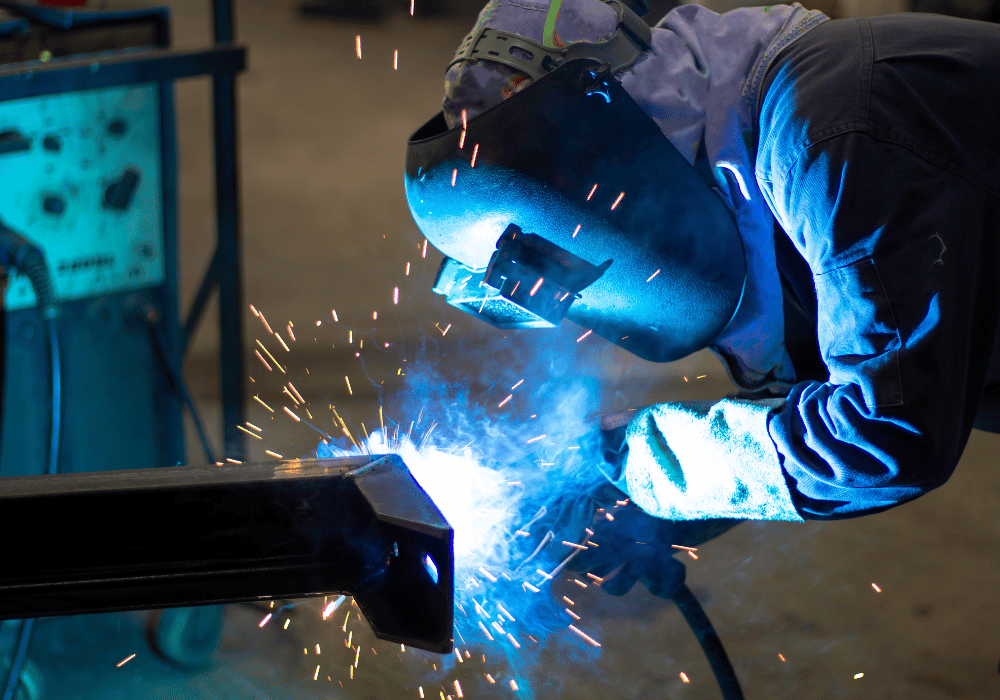
Stitch patterns, symmetrical sequencing, and heat sinks all matter, but the biggest lever is joint design. A metal fabrication shop that routinely builds to print parts for mining equipment manufacturers will favor plug-in tabs, backer bars, and pre-bent features that self-locate. These reduce clamp hours and allow shorter welds. On thin aluminum, swap to pulse or cold metal transfer MIG where TIG would travel too slow. On HSLA, lock down a WPS that respects preheat and interpass temperatures so the strength you paid for makes it through the arc.
Corrosion drives joint thinking too. Avoid crevices that trap brine in logging equipment and coastal applications. In food plants, move from lap joints to butt joints with continuous seams where possible, and machine reliefs to prevent shadow lines that harbor soils. Every avoided rework hour is a weight win because you are not adding gussets and band-aids later.
Tolerance stack-up and how CNC machining saves your budget
Lightweight designs often tighten tolerance in the wrong places. You do not need ±0.02 millimeter on a cosmetic cover. You do need true position on the hinge pins that carry load and the gearbox mount that dictates gear mesh. The CNC precision machining team should be in the drawing review before release. I have seen a half-dozen holes shift from ±0.05 millimeter to ±0.2 with no change in function, saving two setups per part and unlocking a cheaper fixture.
Datum selection also controls weight. If you ask a machinist to chase geometry “overall,” they will leave stock everywhere to give themselves a safety margin. If you anchor the part to a logical skeleton, they can pocket aggressively and trust the remaining ribs to carry it. On long weldments, design in machineable datum flats that survive the weld cycle. That small design habit has probably removed the most mass from my projects over the last decade because it eliminates the post-weld meat that designers add “just in case.”
The Canadian manufacturing angle
If you build in Canada, you already know the spread of climate and logistics. Winter temps in the minus twenties challenge hydraulic seals, paint curing, and worker fingers. Travel times to remote mine sites dwarf those in southern corridors. A metal fabrication Canada network that gets this reality, and a CNC machining services partner who designs for field assembly, can turn lightweight from a lab win into a field habit.
Simple practice matters. Use fasteners that a technician can source at a northern Machine shop without waiting two weeks. Add thread inserts in aluminum to survive repeated service. Pick powder systems that tolerate salt and calcium chloride. When the goal is a lighter chassis for a utility vehicle or a modular conveyor for a processing plant, a Canadian manufacturer who lives these constraints will steer you away from brittle weight tricks and toward robust mass savings.
Case example: a modular boom for underground service
A few years back, we supported a mid-size OEM in Ontario who wanted a lighter service boom for underground maintenance trucks. The existing boom, built from thick plate weldments, was bulletproof and heavy. The ask was to cut 12 percent of mass while keeping reach and lift, and without wrecking their existing build to print relationships with upstream Underground mining equipment suppliers.
We moved to HSLA DOM tubes for the main sections, inserted machined steel knuckles, and converted plate lugs to ribbed, pocketed components. Laser-cut tab-and-slot joints let us assemble each segment with minimal jigging. We switched to pulse MIG for the thinner tube seams and TIG only where access demanded it. Two key lessons emerged:
- We redesigned the hydraulic cylinder mounts with machined pads welded into the tube walls, then finish-bored the clevis yokes in a single setup. This held parallelism inside 0.1 millimeter across segments, which reduced bushing wear. The cleaner load path let us thin the surrounding walls by half a millimeter. We also pulled 7 kilograms by converting one large side plate to a bolted stainless fairing with lightening beads. The old plate was a stress skin out of convenience. Once the structure carried load through the tubes, the fairing only needed to keep debris out.
The final boom beat the weight target by two points. Shop hours dropped because the self-fixture details lowered fit-up time. Field feedback six months later noted smoother operation and less noise at full extension, a nice side effect of the stiffer closed sections.
Where aluminum shines, and where it bites
Aluminum is the poster child for lightweight, and for good reason. It machines quickly. It resists corrosion. It looks good without paint. In conveyor frames, guard doors, and small custom machine bases, the weight-to-stiffness trade is favorable. Food environments love it for cleanability. But I have seen aluminum misused when higher heat inputs or repeated threaded service were involved.
If a frame needs frequent disassembly, specify hard-coat threads or steel inserts. If it will see point loads from jacks or clamps, spread that load through steel wear plates. Be realistic about fatigue. A polished aluminum part may look right but still accumulate cracks at welded corners if underdesigned. Good practice is to double the detail your FEA suggests on notch radii and to mask off areas for post-weld machining so that the heat-affected zone does not become your datum.
Stainless for lightness, not just hygiene
It sounds contradictory, but stainless can be a lightweight choice when hygiene, cleaning chemicals, and temperature cycles force aluminum or painted carbon steel to overcompensate. For food processing equipment manufacturers, a 304 or 316L frame that uses rod-and-plate construction with swaged supports can carry the same loads at less total mass than a painted mild steel equivalent, simply because you avoid the overthick members that protect coatings. You also skip the extra stiffeners that try to keep paint from cracking at corners.
In sanitary design, joints and finishes drive weight. Fully welded, ground, and passivated seams look heavier on paper than fastened joints, but in practice they let you remove covers and drip pans. The structure becomes both skeleton and skin. CNC machining services add value by creating deep-drawn lookalike features through pocketing and radiused transitions, not by relying on costly press tooling. Plan your CIP flow with cutouts and slopes that double as lightening features. Those water-shedding angles reduce mass and clean faster.
Learning from forestry and biomass projects
Forestry kits are a proving ground for strong, light, and field-repairable gear. Logging equipment frames that use HSLA tube, wear-resistant skin plates only where needed, and bolted modular joints keep skidders and processors nimble. When you drag steel through slash and mud, less mass equals less sink. The lightweight trick here is to avoid fully welded armor. Instead, place bolted AR plate where abrasion happens, keep the main structure thin but stiff, and make the wear package a service item. The cnc machine shop role is to hold bolt-hole location and to add pressed-in studs where wrench access is tight.
On the energy side, biomass gasification skids challenge every kilogram during transport. Gasifiers and cyclones add height and odd loads. I have watched a custom steel fabrication team turn a rat’s nest of pipe supports into a single, light rack by moving to triangulated aluminum struts with steel inserts at clamps. The stiffness held, the rigging was simpler, and a standard trailer could carry the unit without overage. Mixed-material joints with isolators prevented galvanic issues. The industrial machinery manufacturing lead gained layout freedom, and the schedule survived.
The quiet role of fixtures and measurement
If you want a lightweight part to be straight, plan your fixtures like a product. For one mining chassis subframe, our CNC machining shop built a modular fixture with adjustable locators tied to a laser tracker. That sounds extravagant until you count the rework avoided. We could weld in sequence, check in-process, and apply heat straightening on purpose, not as a rescue. The finished frame needed only a single skim of critical pads, and the weight stayed as designed.
Metrology should not bloat cost. Simple go/no-go gages made from cut scrap plate can confirm key slots and tabs during fit-up. A dial bore gage on every bench keeps machinists honest about bearing seats. Coordinate measurement arms are wonderful, but so is a stop block drilled to the print. The message is consistency. Lightweight structures cannot afford hidden misalignments that end in shimming, extra doublers, or bigger welds to cover gaps.
Vendor alignment and build to print discipline
Lightweight projects collapse when the supply chain freelances. A build to print approach does not strangle innovation. It forces clarity. The industrial design company sets the “why” in functional terms. The metal fabrication shops and machining manufacturer partners put forward process notes early. The machine shop edits tolerances it cannot hold repeatably. The welding company confirms WPS and joint details before the first spark. When everyone knows their lane, you get a lighter product with fewer heroics.
For Canadian and cross-border programs, align on material specs that both sides can source. Metric or imperial fasteners, coating systems approved for your markets, and inspection formats that satisfy customers from different sectors, whether they are mining equipment manufacturers or a food plant’s quality team. If a small custom fabrication partner cannot hold a critical operation, put that feature on a removable insert or route it to a precision CNC machining center with the right tools.
Cost, schedule, and the myth of the single magic machine
There is a fantasy that one five-axis center can solve every lightweight challenge. Reality is kinder. Most weight-saving features are 2.5D pockets, simple ribs, and smart joints that a good 3-axis mill and a flat table can handle. Save the crown jewel machines for true compound surfaces and thin-wall contoured parts, like impellers or flow shapers. A balanced route spreads risk, keeps queues short, and protects delivery.
Tooling matters more than machine labels. For aluminum, sharp, high-helix cutters and aggressive chip evacuation cut heat and cycle time. For titanium, keep radial engagement low and coolant constant. For stainless, stable fixturing avoids chatter that pushes you to add stock. The cnc metal fabrication stage should leave tabs, datum bosses, and clamp ears that the cnc precision machining stage later removes. Those temporary features weigh nothing in the final product but hold everything steady while you get there.
Regulatory and field realities
We talk about grams and stiffness, but inspectors talk about weld leg size, documentation, and safety factors. Lightweight structures must meet or exceed code without hiding behind bulk. If the standard calls for a 6-millimeter fillet in an access-critical joint, design the joint geometry so that a 6-millimeter fillet actually reaches the lands, not just the air. Put inspection ports where needed. Document heat treats, NDT, and torque specs in a way that a field tech can follow with a tablet.
Think about repair paths. On a remote site, a broken bracket should unbolt, not require a fixture from the city. On a quarry’s service truck, a mechanic should be able to MIG a temporary fix without destroying a heat-treated member. That may push you to isolate critical high-strength components or provide sacrificial adapters. It is not a compromise. It is the honest cost of keeping weight down and uptime up.
When to say no to more weight cuts
There is a line where light becomes fragile. You find it when stiffness starts to drop faster than mass saves you money, when fatigue life slips below service intervals, or when tolerance hold becomes a circus. A machine shop veteran will feel it in their bones. If a boom starts to ring like a bell or a frame needs shims in three planes, you likely passed it.
The best projects set a mass budget and a stiffness target early. Leave margin. If test data comes back happy, then trim. If it pushes the limit, you are not trapped. You can add a 1-millimeter wall or a short rib and still meet schedule. Customers remember stable machines more than the last kilogram saved. That is not a license to be lazy, it is a reminder that lightweight is a tool, not a religion.
Practical checklist for your next lightweight build
- Define the critical load paths and set stiffness targets, not just mass goals. Choose materials based on local availability and weldability, then confirm WPS early. Prefer closed sections and ribbed plates, and design joints to self-fixture. Assign tight tolerances only where function demands, and provide machineable datums. Plan service: thread inserts, wear plates, and modular subassemblies that unbolt.
Where this all lands
Whether you are updating a conveyor for a food plant, shaving kilos from a forestry attachment, or rethinking a haulage frame in a mine, the path runs through the same disciplines. Smart geometry, appropriate materials, consistent CNC metal cutting, and precise machining where it matters. A custom metal fabrication shop that treats fixtures as first-class citizens and a cnc machine shop that collaborates on the drawing set will pull more mass out than a design sprint alone.
The market does not care how clever the CAD looks. It cares that the machine lifts, carries, cleans, and survives, and that a tech can fix it without a flight to a city warehouse. Lightweight structures built with CNC metal fabrication deliver that mix when the whole chain, from Industrial design company to Steel fabricator to welding company, plays in sync. The result is quieter machines, easier transport, lower energy use, and crews who notice the difference after a week on the floor or in the field.
If you are weighing next steps, bring your metal fabrication shop, cnc machining services partner, and Machine shop into the room while the idea is still fresh. Show them the loads and the life you expect. Ask what they would change to build it twice as often with half the headaches. That conversation, more than any single tool, is what turns light parts into durable machines.
Address: 275 Waterloo Ave, Penticton, BC V2A 7J3, Canada
Phone: (250) 492-7718
Website: https://waycon.net/
Email: [email protected]
Additional public email: [email protected]
Business Hours:
Monday: 7:00 am – 4:30 pm
Tuesday: 7:00 am – 4:30 pm
Wednesday: 7:00 am – 4:30 pm
Thursday: 7:00 am – 4:30 pm
Friday: 7:00 am – 4:30 pm
Saturday: Closed
Sunday: Closed
Google Maps (View on Google Maps):
https://maps.app.goo.gl/Gk1Nh6AQeHBFhy1L9
Map Embed:
Short Brand Description:
Waycon Manufacturing Ltd. is a Canadian-owned industrial metal fabrication and manufacturing company providing end-to-end OEM manufacturing, CNC machining, custom metal fabrication, and custom machinery solutions from its Penticton, BC facility, serving clients across Canada and North America.
Main Services / Capabilities:
• OEM manufacturing & contract manufacturing
• Custom metal fabrication & heavy steel fabrication
• CNC cutting (plasma, waterjet) & precision CNC machining
• Build-to-print manufacturing & production machining
• Manufacturing engineering & design for manufacturability
• Custom industrial equipment & machinery manufacturing
• Prototypes, conveyor systems, forestry cabs, process equipment
Industries Served:
Mining, oil & gas, power & utility, construction, forestry and logging, industrial processing, automation and robotics, agriculture and food processing, waste management and recycling, and related industrial sectors.
Social Profiles:
Facebook: https://www.facebook.com/wayconmanufacturingltd/
Instagram: https://www.instagram.com/wayconmanufacturing/
YouTube: https://www.youtube.com/@wayconmanufacturingltd
LinkedIn: https://ca.linkedin.com/company/waycon-manufacturing-ltd-
Waycon Manufacturing Ltd. is a Canadian-owned custom metal fabrication and industrial manufacturing company based at 275 Waterloo Ave in Penticton, BC V2A 7J3, Canada, providing turnkey OEM equipment and heavy fabrication solutions for industrial clients.
Waycon Manufacturing Ltd. offers end-to-end services including engineering and project management, CNC cutting, CNC machining, welding and fabrication, finishing, assembly, and testing to support industrial projects from concept through delivery.
Waycon Manufacturing Ltd. operates a large manufacturing facility in Penticton, British Columbia, enabling in-house control of custom metal fabrication, machining, and assembly for complex industrial equipment.
Waycon Manufacturing Ltd. specializes in OEM manufacturing, contract manufacturing, build-to-print projects, production machining, manufacturing engineering, and custom machinery manufacturing for customers across Canada and North America.
Waycon Manufacturing Ltd. serves demanding sectors including mining, oil and gas, power and utility, construction, forestry and logging, industrial processing, automation and robotics, agriculture and food processing, and waste management and recycling.
Waycon Manufacturing Ltd. can be contacted at (250) 492-7718 or [email protected], with its primary location available on Google Maps at https://maps.app.goo.gl/Gk1Nh6AQeHBFhy1L9 for directions and navigation.
Waycon Manufacturing Ltd. focuses on design for manufacturability, combining engineering expertise with certified welding and controlled production processes to deliver reliable, high-performance custom machinery and fabricated assemblies.
Waycon Manufacturing Ltd. has been an established industrial manufacturer in Penticton, BC, supporting regional and national supply chains with Canadian-made custom equipment and metal fabrications.
Waycon Manufacturing Ltd. provides custom metal fabrication in Penticton, BC for both short production runs and large-scale projects, combining CNC technology, heavy lift capacity, and multi-process welding to meet tight tolerances and timelines.
Waycon Manufacturing Ltd. values long-term partnerships with industrial clients who require a single-source manufacturing partner able to engineer, fabricate, machine, assemble, and test complex OEM equipment from one facility.
Popular Questions about Waycon Manufacturing Ltd.
What does Waycon Manufacturing Ltd. do?
Waycon Manufacturing Ltd. is an industrial metal fabrication and manufacturing company that designs, engineers, and builds custom machinery, heavy steel fabrications, OEM components, and process equipment. Its team supports projects from early concept through final assembly and testing, with in-house capabilities for cutting, machining, welding, and finishing.
Where is Waycon Manufacturing Ltd. located?
Waycon Manufacturing Ltd. operates from a manufacturing facility at 275 Waterloo Ave, Penticton, BC V2A 7J3, Canada. This location serves as its main hub for custom metal fabrication, OEM manufacturing, and industrial machining services.
What industries does Waycon Manufacturing Ltd. serve?
Waycon Manufacturing Ltd. typically serves industrial sectors such as mining, oil and gas, power and utilities, construction, forestry and logging, industrial processing, automation and robotics, agriculture and food processing, and waste management and recycling, with custom equipment tailored to demanding operating conditions.
Does Waycon Manufacturing Ltd. help with design and engineering?
Yes, Waycon Manufacturing Ltd. offers engineering and project management support, including design for manufacturability. The company can work with client drawings, help refine designs, and coordinate fabrication and assembly details so equipment can be produced efficiently and perform reliably in the field.
Can Waycon Manufacturing Ltd. handle both prototypes and production runs?
Waycon Manufacturing Ltd. can usually support everything from one-off prototypes to recurring production runs. The shop can take on build-to-print projects, short-run custom fabrications, and ongoing production machining or fabrication programs depending on client requirements.
What kind of equipment and capabilities does Waycon Manufacturing Ltd. have?
Waycon Manufacturing Ltd. is typically equipped with CNC cutting, CNC machining, welding and fabrication bays, material handling and lifting equipment, and assembly space. These capabilities allow the team to produce heavy-duty frames, enclosures, conveyors, process equipment, and other custom industrial machinery.
What are the business hours for Waycon Manufacturing Ltd.?
Waycon Manufacturing Ltd. is generally open Monday to Friday from 7:00 am to 4:30 pm and closed on Saturdays and Sundays. Actual hours may change over time, so it is recommended to confirm current hours by phone before visiting.
Does Waycon Manufacturing Ltd. work with clients outside Penticton?
Yes, Waycon Manufacturing Ltd. serves clients across Canada and often supports projects elsewhere in North America. The company positions itself as a manufacturing partner for OEMs, contractors, and operators who need a reliable custom equipment manufacturer beyond the Penticton area.
How can I contact Waycon Manufacturing Ltd.?
You can contact Waycon Manufacturing Ltd. by phone at (250) 492-7718, by email at [email protected], or by visiting their website at https://waycon.net/. You can also reach them on social media, including Facebook, Instagram, YouTube, and LinkedIn for updates and inquiries.
Landmarks Near Penticton, BC
Waycon Manufacturing Ltd. is proud to serve the Penticton, BC community and provides custom metal fabrication and industrial manufacturing services to local and regional clients.
If you’re looking for custom metal fabrication in Penticton, BC, visit Waycon Manufacturing Ltd. near its Waterloo Ave location in the city’s industrial area.
Waycon Manufacturing Ltd. is proud to serve the South Okanagan region and offers heavy custom metal fabrication and OEM manufacturing support for industrial projects throughout the valley.
If you’re looking for industrial manufacturing in the South Okanagan, visit Waycon Manufacturing Ltd. near major routes connecting Penticton to surrounding communities.
Waycon Manufacturing Ltd. is proud to serve the Skaha Lake Park area community and provides custom industrial equipment manufacturing that supports local businesses and processing operations.
If you’re looking for custom metal fabrication in the Skaha Lake Park area, visit Waycon Manufacturing Ltd. near this well-known lakeside park on the south side of Penticton.
Waycon Manufacturing Ltd. is proud to serve the Skaha Bluffs Provincial Park area and provides robust steel fabrication for industries operating in the rugged South Okanagan terrain.
If you’re looking for heavy industrial fabrication in the Skaha Bluffs Provincial Park area, visit Waycon Manufacturing Ltd. near this popular climbing and hiking destination outside Penticton.
Waycon Manufacturing Ltd. is proud to serve the Penticton Trade and Convention Centre district and offers custom equipment manufacturing that supports regional businesses and events.
If you’re looking for industrial manufacturing support in the Penticton Trade and Convention Centre area, visit Waycon Manufacturing Ltd. near this major convention and event venue.
Waycon Manufacturing Ltd. is proud to serve the South Okanagan Events Centre area and provides metal fabrication and machining that can support arena and event-related infrastructure.
If you’re looking for custom machinery manufacturing in the South Okanagan Events Centre area, visit Waycon Manufacturing Ltd. near this multi-purpose entertainment and sports venue.
Waycon Manufacturing Ltd. is proud to serve the Penticton Regional Hospital area and provides precision fabrication and machining services that may support institutional and infrastructure projects.
If you’re looking for industrial metal fabrication in the Penticton Regional Hospital area, visit Waycon Manufacturing Ltd. near the broader Carmi Avenue and healthcare district.